Cool Cooked Food Before Refrigerating UK Guidance
A practical step-by-step guide to cool cooked food before refrigerating UK guidance, including preparation, instructions, common issues, tips, and next steps.
Cool Cooked Food Before Refrigerating UK Guidance
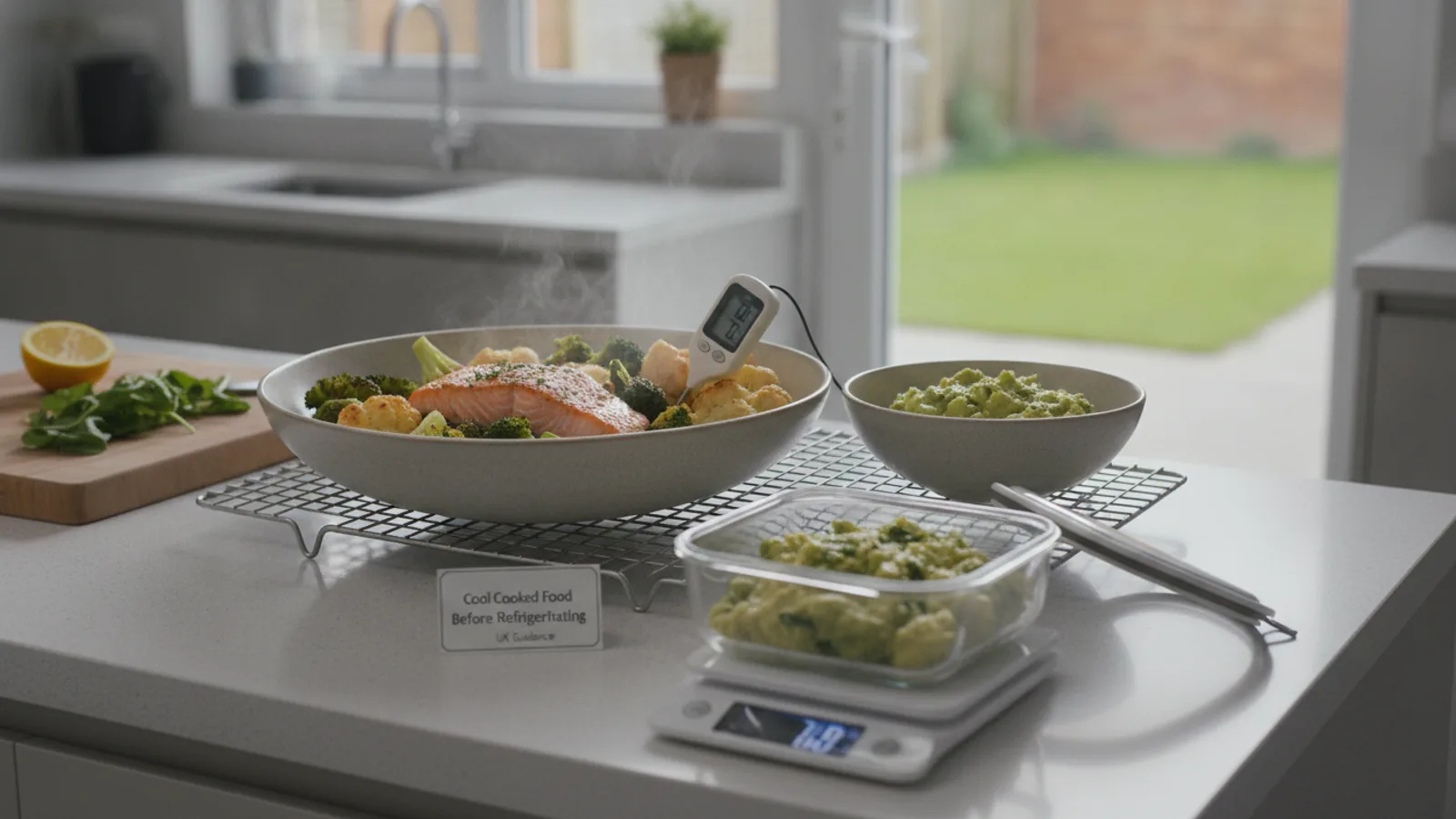
Cooling cooked food safely before refrigeration is a simple but important kitchen habit that reduces the risk of harmful bacteria growing in your leftovers. This guide explains how to cool food quickly using shallow containers, portioning, and safe temperature checks, while following common UK kitchen advice. You will learn a clear six-step method, what to do in everyday situations, and how to avoid common mistakes such as leaving food out too long or sealing it while still hot.
Fast Answer
- Cool cooked food within two hours, then refrigerate it in shallow containers so it reaches fridge temperature quickly.
- Divide large batches into smaller portions and stir occasionally to release heat before sealing and chilling.
Before You Start
- Clean and dry enough shallow containers with lids so hot food can be spread out rather than stacked deep.
- Clear space in your fridge before cooking so cooled dishes can go straight in without waiting on the counter.
- Have a clean food thermometer ready to check that cooling food is moving down through the safe range.
- Plan your cooling timeline around the two-hour window, using a timer or phone reminder so nothing sits out too long.
Step-by-Step Instructions
Move food out of the hot pan
As soon as cooking finishes, transfer the food from the hot pan or pot into a clean, shallow container. Do not leave it in the cooking vessel to cool, because thick metal and deep food hold heat for a long time. Spread the food into an even layer, aiming for a depth of no more than about five centimetres if you can. If you have a large batch, split it between two or more containers instead of filling one deep tub. This is the first practical action because surface area controls how fast heat escapes. A practical check is to look at the depth: if a spoon stands up in a deep pool of food, it will cool too slowly. The reason this matters is that slow cooling keeps food in the temperature range where bacteria multiply most readily, so starting the process promptly protects both the food and your fridge.
Loosen the lid while steam escapes
Place the containers somewhere clean and let them sit with the lids off or only loosely resting on top. Steam needs to escape, and trapping it under a tight lid keeps the food warm and creates condensation that can drip back onto the surface. Keep the containers away from direct sunlight, radiators, and hot appliances, and do not stack them while they are still warm. A practical check is to hold your hand a few centimetres above the food: if you can feel strong heat, it is still in the rapid-cooling stage and should stay uncovered. The reason for this check is that the moist, warm surface under a sealed lid is exactly the environment where bacteria can grow quickly. Once the food stops steaming and feels only gently warm, you can move on to the next stage of cooling and prepare it for the fridge.
Stir and portion to speed cooling
Stir the food gently every ten to fifteen minutes to release heat from the centre and bring cooler food to the surface. At the same time, divide any large portions into smaller ones, such as single servings or meal-sized portions, because smaller volumes cool much faster. Use a clean spoon each time, or rinse the spoon between stirs, to avoid adding bacteria back into the food. A practical check is to touch the outside of the container: when the base no longer feels hot against your hand, the food is moving in the right direction. This matters because the centre of a deep portion can stay warm long after the edges feel cool, and that hidden warm core is where bacteria can thrive. Stirring and portioning are simple actions that shorten the time food spends in the unsafe range.
Check the temperature as it drops
Use a clean food thermometer to check the temperature of the food, aiming to get it down towards fridge temperature within the two-hour window. Insert the probe into the thickest or deepest part, away from the container wall, and clean the probe before and after each use. If the food is still well above fridge temperature after about ninety minutes, move it into smaller containers or place the container in a cool water bath to speed things along. A practical check is to compare the reading from the centre with the reading near the edge; a large gap tells you the middle still needs more time and attention. This check matters because the centre is the last part to cool, and guessing by touch alone can miss a warm core. Recording or noting the time when cooling began helps you stay inside the safe window.
Refrigerate once it stops steaming
When the food has stopped steaming and is no longer hot to the touch, cover it and place it in the fridge. Put containers on a shelf rather than against the back wall, and leave space between them so cold air can circulate. Do not pack warm containers tightly together or place them next to ready-to-eat foods that could be affected by a rise in temperature. A practical check is to feel the outside of the container: it should be only slightly warm, not hot, and the food underneath should not be releasing visible steam. The reason for waiting until this point is that a very hot container can warm the fridge and nearby food, while a partly cooled container still finishes cooling safely in the cold air. Covering the food at this stage also prevents it from drying out or picking up other flavours in the fridge.
Monitor and store safely afterwards
Once the food is in the fridge, check it again after about thirty minutes to confirm it is cooling steadily and that the fridge door has been closed properly. Keep raw and cooked foods separate, with cooked dishes stored above raw meat so nothing can drip onto them. Use clean, labelled containers and note the date so you can keep track of how long the food has been stored. A practical check is to make sure the container is not sitting directly under a warm appliance or in a crowded spot where air cannot move around it. This matters because the fridge works best when air circulates freely, and a blocked or overloaded shelf can leave some foods warmer than expected. Follow your fridge manufacturer's guidance for safe storage temperatures and shelf placement.
Quick Reference
| Situation | Action | Why it helps |
|---|---|---|
| You have cooked a large pot of soup or stew for later. | Divide it into several shallow containers, stir occasionally, and refrigerate once it stops steaming and feels only slightly warm. | Splitting a large batch into smaller portions increases the surface area, so the food passes through the warm range faster and spends less time where bacteria can multiply. |
| You are cooling a roast or a large piece of meat. | Carve or cut it into smaller pieces, spread them in a single layer in a shallow dish, and refrigerate within the two-hour window. | A whole roast holds heat in its centre for a long time, and cutting it into smaller pieces lets the heat escape much more quickly and evenly. |
| You need to chill rice or pasta for a later meal. | Spread it thinly in a shallow container, cool it quickly, and refrigerate it as soon as it stops steaming rather than leaving it out. | Cooked grains and pasta can support bacterial growth if left warm, so quick cooling and prompt refrigeration are important for safety. |
Common Issues
- The food is still warm after two hours on the counter.: Move it into smaller, shallower containers and place it in the fridge straight away, or use a cool water bath around the container to bring the temperature down faster. If it has been out much longer than two hours, or was left in a warm room, it is safer to discard it rather than chill it.
- The fridge feels warm after putting food inside.: Remove the warm container, divide the food into smaller portions, let it cool a little longer until it stops steaming, then return it. Avoid placing several warm containers in at once, and check that the fridge door seals properly and that shelves are not overloaded.
- The food smells or looks fine but you are unsure it cooled safely.: Do not rely on smell or appearance alone. If you cannot confirm it cooled within the safe window, or if it sat out for a long time, throw it away. When in doubt, follow your local food safety guidance and your appliance manual for safe storage advice.
Advanced Tips
- Use a clean water bath around a sealed container to pull heat out faster, changing the water if it becomes warm to the touch.
- Place containers on a wire rack in the fridge rather than a solid shelf, so cold air can move underneath and around them.
- For very large batches, cool in stages: portion first, stir, then chill, and check the centre temperature before sealing for storage.
Final Checklist
- Food is divided into shallow containers no deeper than about five centimetres where possible.
- Cooling began within a short time of cooking and stayed inside the two-hour window.
- Food stopped steaming and felt only slightly warm before being covered and refrigerated.
- Containers are labelled, spaced apart in the fridge, and stored away from raw foods.
FAQ
How long can cooked food sit out before refrigerating?
Common UK kitchen advice is to keep the total time at room temperature to no more than two hours. If the room is warm, aim to move food to the fridge sooner. Start counting from the moment cooking ends, and remember that time spent serving, portioning, and eating counts towards that window. If you are unsure how long food has been out, it is safer to discard it than to store it.
Can I put hot food straight into the fridge?
It is better to let food stop steaming and cool to only slightly warm before it goes in. A very hot container can raise the temperature inside the fridge and affect other foods nearby. If you need to chill something quickly, divide it into smaller shallow containers, stir it, or use a cool water bath, then refrigerate it within the two-hour window. Check your appliance manual for any specific guidance.
What is the safest way to cool a large batch of food?
Divide the batch into several shallow containers, spread the food into an even layer, and stir every ten to fifteen minutes to release heat. Keep the containers apart so air can move around them, and move them to the fridge once they stop steaming. If you have a food thermometer, check the centre of the deepest portion. Where guidance may vary, follow your local food safety advice and your fridge manufacturer's instructions.