Cook Celeriac Ribbons As A Pasta Alternative
A practical step-by-step guide to cook celeriac ribbons as a pasta alternative, including preparation, instructions, common issues, tips, and next steps.
Cook Celeriac Ribbons As A Pasta Alternative
Celeriac, also called celery root, can be cut into long, thin ribbons that mimic pasta shapes. When cooked briefly in salted water and then tossed with a sauce, these ribbons become tender but still hold a slight bite. This guide explains how to choose, peel, slice, blanch, and sauce celeriac ribbons so they work as a satisfying pasta alternative. You will learn the right thickness, cooking time, and handling tricks to avoid mushiness or raw crunch. The method suits creamy, oily, or brothy sauces and fits into low-carb, gluten-free, or vegetable-forward meals. With a sharp knife or a sturdy peeler and a few minutes of attention, you can turn a humble root into a convincing stand-in for noodles any night of the week.
Fast Answer
- Peel a firm celeriac, slice it into thin planks, then cut those planks into long ribbons about the width of tagliatelle. Boil them in well-salted water for 60 to 90 seconds, then drain and sauce immediately.
- For the best texture, keep ribbons uniform and taste one after 60 seconds. They should bend easily but still resist slightly when bitten. Overcooked celeriac turns soft and falls apart, so pull them out early and let residual heat finish the job.
Before You Start
- Choose a celeriac that feels heavy for its size and has firm, unblemished skin. Soft spots or a spongy feel mean the inside may be woody or hollow, which makes ribbons break apart.
- Set up a bowl of cold water with a squeeze of lemon or a splash of vinegar. As you cut each ribbon, drop it into the water to slow browning and rinse away excess starch.
- Use a sharp chef's knife or a mandoline to cut planks about one eighth of an inch thick, then stack two or three planks and slice them into strips as wide as your thumb.
- Bring a wide pot of water to a rolling boil and add a generous handful of salt. The water should taste seasoned like a light soup, because this is the only chance to flavor the ribbons from within.
Step-by-Step Instructions
Prepare the celeriac root
Rinse the celeriac under cool running water and scrub away any loose soil with a vegetable brush. Place it on a sturdy cutting board. Use a sharp chef's knife to slice off the top and bottom so the root sits flat. Then cut down the sides in wide strips to remove all the brown skin and the fuzzy layer just beneath it. You want to expose the pale, creamy flesh. A practical check: run your finger along the cut surface. If you feel any tough fibers or dark spots, trim them away. This matters because leftover skin or fibrous patches will not soften during the short cooking time and will ruin the tender bite you want. Work patiently around the knobby shape, rotating the root as needed. When you finish, you should have a smooth, rounded block of clean celeriac ready for slicing.
Slice celeriac into thin planks
Stand the peeled celeriac on its flat bottom. Using a sharp knife or a mandoline set to about one eighth of an inch, slice the root from top to bottom into even planks. If you use a knife, keep the blade parallel to the board and use long, smooth strokes rather than sawing. Aim for planks that are thin enough to bend slightly when you lift one by the edge but thick enough to hold their shape. A practical check: hold a plank up to a window. You should see light through it, but it should not be transparent like paper. This thickness matters because too-thick planks will turn into chewy sticks, while paper-thin ones will dissolve in the cooking water. As you finish each plank, stack it on a plate and continue until the whole root is sliced. If any plank is uneven, set it aside for another use like soup.
Cut planks into pasta-like ribbons
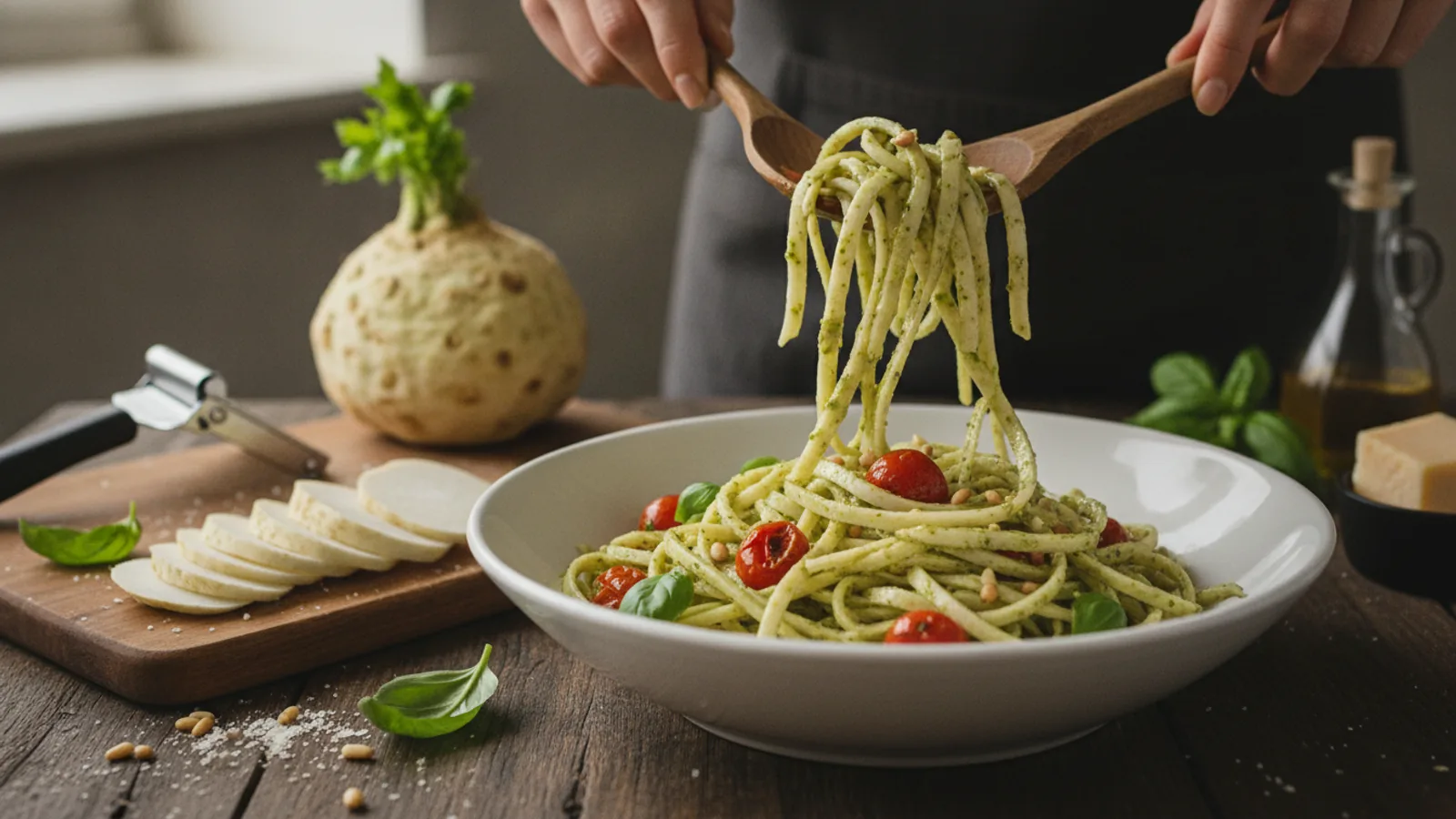
Take two or three planks and stack them neatly on the board. Press down gently with your non-dominant hand, curling your fingertips back for safety. With your dominant hand, slice the stack lengthwise into strips about one quarter to one third of an inch wide. These strips will look like thick noodles, similar to tagliatelle or linguine. A practical check: lay a few ribbons side by side. They should be roughly the same width and length so they cook at the same rate. If some are much wider, slice them again. This evenness matters because a single wide ribbon will stay firm while thin ones turn soft, giving you a mixed texture in one bowl. Continue stacking and slicing until all planks become ribbons. As you finish each batch, transfer the ribbons to the bowl of cold acidulated water. This step keeps them from sticking together and preserves their bright color.
Blanch ribbons in salted water
Bring a large pot of water to a rolling boil and add a generous handful of salt. The water should taste seasoned, like a light broth. Drain the ribbons from the cold water and add them to the boiling pot. Stir gently once to separate them. Start timing as soon as the water returns to a gentle boil. Cook for 60 to 90 seconds. A practical check: after 60 seconds, fish out one ribbon with a slotted spoon and bite it. It should bend easily but still have a slight resistance in the center, like al dente pasta. If it is still crunchy, give it another 15 seconds and test again. This check matters because celeriac goes from tender to mushy very quickly, and the exact time depends on how thin you cut the ribbons and how high your heat is. Do not walk away during this short window.
Drain and shock the ribbons
When the ribbons are just tender, pour them into a colander set in the sink. Drain well, then immediately transfer them to a bowl of ice water for 20 to 30 seconds. This stops the cooking process and keeps them firm. A practical check: lift a ribbon from the ice water and feel it. It should be cool to the touch and still hold its shape without feeling slimy. If it feels slippery or falls apart, you overcooked it; next time reduce the boiling time by 15 seconds. After shocking, drain the ribbons again and spread them on a clean kitchen towel or paper towels. Pat them dry gently. Removing excess water matters because wet ribbons will make your sauce watery and prevent it from clinging. Handle them with care so they do not break. Now they are ready to be tossed with sauce or stored briefly.
Toss with sauce and serve
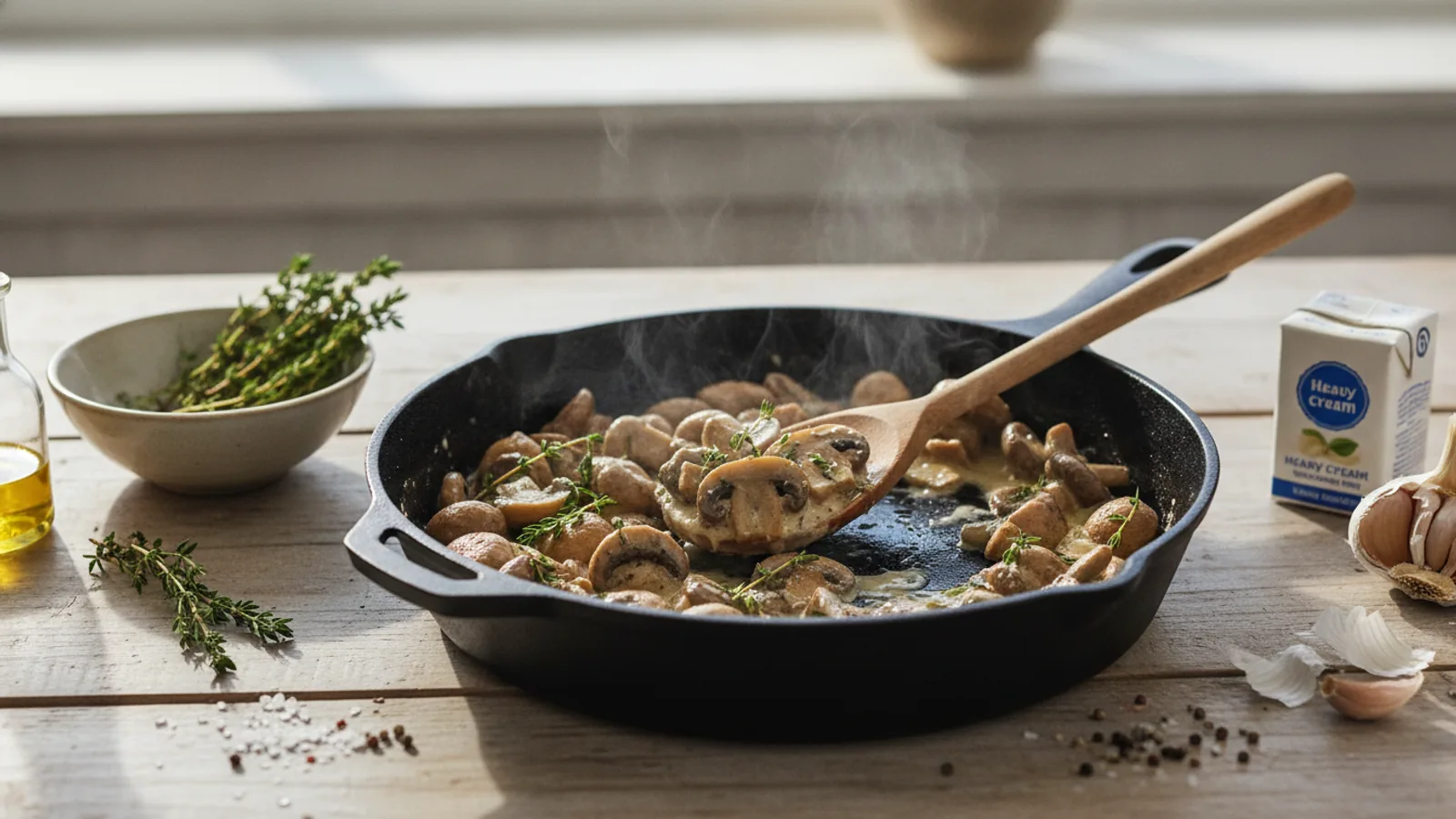
Choose a sauce that coats well, such as a creamy garlic sauce, a simple tomato and olive oil blend, or a brothy mushroom mixture. Warm the sauce in a wide skillet over medium heat. Add the drained ribbons and toss gently with tongs for 30 to 60 seconds, just until they are hot and coated. A practical check: lift a ribbon and see if the sauce clings to it rather than pooling at the bottom of the pan. If the mixture looks dry, add a spoonful of the cooking water or plain water to loosen it. This check matters because celeriac ribbons do not release starch like pasta, so they need a sauce that sticks. Serve immediately in warm bowls. Top with grated cheese, toasted nuts, or chopped herbs if you like. The ribbons are best eaten right away, as they can soften if left sitting in a warm sauce for too long.
Quick Reference
| Situation | Action | Why it helps |
|---|---|---|
| You want ribbons that hold their shape in a hot sauce. | Cut planks one eighth of an inch thick, blanch for exactly 60 seconds, then shock in ice water and pat dry before saucing. | Thicker planks and a short blanch set the structure, while shocking stops cooking so the ribbons stay firm instead of turning soft in the pan. |
| Your celeriac ribbons taste raw or harsh after boiling. | Return them to boiling water for 15 to 30 seconds more, tasting every 15 seconds, then drain and shock again immediately. | Celeriac contains natural compounds that soften with heat, and a slightly longer cook removes the raw bite without turning the ribbons to mush. |
| You need to prepare ribbons ahead of time for a meal later. | After shocking and drying, toss the ribbons with a little oil, store them in a covered container in the refrigerator, and use within one day. | The oil prevents sticking and the cold keeps them fresh, but they will lose their best texture after a day, so plan to use them quickly. |
Common Issues
- Ribbons turn mushy and break apart in the pot.: Reduce boiling time to 45 to 60 seconds, use a gentler boil, and shock in ice water right away. Also check that your planks are not too thin; aim for one eighth of an inch. If they still fall apart, your celeriac may be older and softer, so cut thicker ribbons and cook for only 45 seconds.
- Ribbons stick together into a clump after draining.: Rinse the ribbons in cold water after draining to remove surface starch, then pat them dry and toss with a small amount of oil before saucing. If you are not saucing immediately, spread them on a tray in a single layer instead of piling them in a bowl. A gentle toss with tongs, not a spoon, also helps keep them separate.
- The sauce slides off the ribbons and pools at the bottom.: Thicken your sauce slightly with a little starch or cream, or add a spoonful of the vegetable cooking water to help it cling. Toss the ribbons in the pan for 30 seconds over medium heat so the sauce reduces and coats them. Avoid adding oil to the sauce after tossing; instead, finish with a drizzle on top just before serving to keep the coating intact.
Advanced Tips
- For a more pasta-like chew, blanch the ribbons, shock them, then saute them in a hot pan with a little oil for one minute before adding sauce. This drives off surface water and gives a firmer bite.
- Use a spiralizer with a flat blade to make wide ribbons quickly, but cut the celeriac into short blocks first so the ribbons do not become too long and tangled during cooking.
- Save the trimmed celeriac peelings and small pieces to simmer in stock for extra flavor, then strain them out. This reduces waste and adds a subtle celery note to your sauce.
Final Checklist
- Celeriac is firm, heavy, and free of soft spots or deep cracks before you begin peeling.
- Ribbons are cut to an even thickness, about one eighth of an inch, and kept in acidulated water until boiling.
- Boiling water is well salted and the ribbons are cooked for 60 to 90 seconds, then tested for doneness.
- Ribbons are shocked in ice water, drained well, patted dry, and tossed with sauce just before serving.
FAQ
Can I eat celeriac ribbons raw instead of cooking them?
Yes, you can eat them raw, but they will be crunchy and have a stronger, more earthy flavor. For a raw preparation, slice them very thin, about one sixteenth of an inch, and marinate them in lemon juice, olive oil, and salt for at least 20 minutes. The acid softens them slightly. However, if you want a texture closer to pasta, blanching for 60 to 90 seconds is the better choice because it tames the raw bite and makes the ribbons flexible.
How do I stop celeriac ribbons from turning brown after cutting?
As soon as you cut the ribbons, place them in a bowl of cold water with a squeeze of lemon juice or a splash of vinegar. This acidic bath slows the natural browning reaction. Keep them submerged until you are ready to boil them. If you must hold them for more than an hour, store the bowl in the refrigerator. Even with this method, some slight color change is normal and does not affect taste, but the acid helps them stay pale and appetizing.
What sauces work best with celeriac ribbons as a pasta alternative?
Sauces that cling well are best: creamy garlic or cheese sauces, thick tomato sauces, and brothy mixtures with mushrooms or beans. Oily sauces like pesto or garlic and oil also work if you toss them vigorously and add a little cooking water to help them coat. Avoid very thin, watery sauces because they will slide off the ribbons. For a cold dish, a lemony vinaigrette with herbs is a good choice. In all cases, toss the ribbons with the sauce in a warm pan for 30 seconds so the coating sticks.