One Tray Salmon And Asparagus Supper
A practical step-by-step guide to one tray salmon and asparagus supper, including preparation, instructions, common issues, tips, and next steps.
One Tray Salmon And Asparagus Supper
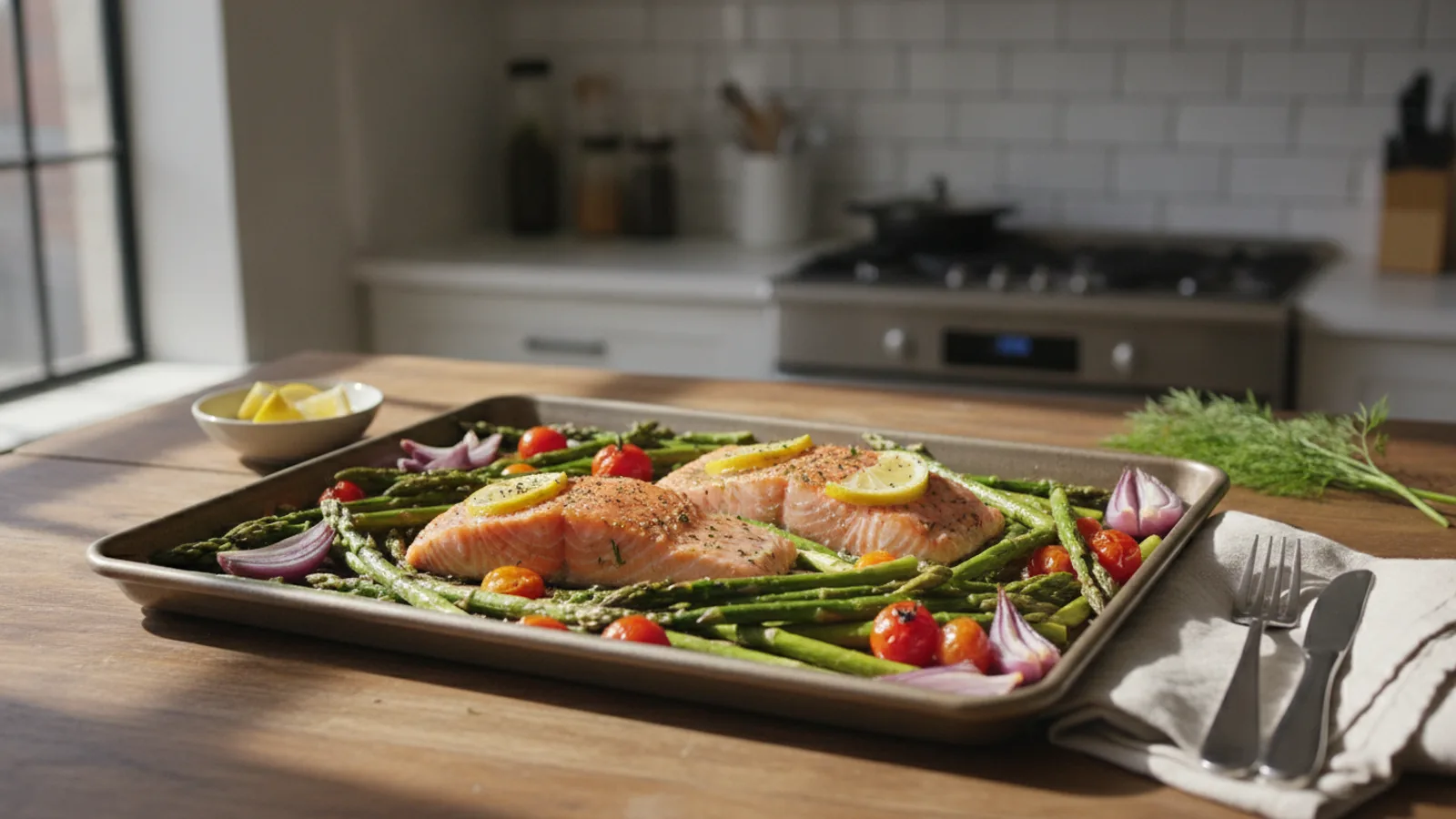
This guide shows you how to make a complete one tray salmon and asparagus supper with roasted salmon fillets, tender asparagus, and simple seasonings. You will learn how to prepare the tray, time the cooking so the fish stays moist and the asparagus stays bright, and check doneness without guesswork. The method uses one sheet pan, basic tools, and a short list of ingredients. It is designed for a weeknight when you want a calm, predictable meal with minimal cleanup. Follow the steps in order, use the visual and touch checks, and adjust only when your own oven or ingredients require it.
Fast Answer
- Preheat your oven to a moderate heat, line a large rimmed tray, and arrange salmon and asparagus in a single layer with space between pieces.
- Roast until the salmon flakes at the thickest part and the asparagus is tender but still bright, then rest the tray for a few minutes before serving.
Before You Start
- Set out one large rimmed tray, a cutting board, a knife, a small bowl, and a spatula or fish turner so you are not searching for tools once the fish is seasoned.
- Pat the salmon fillets dry with paper towels on all sides. Dry surfaces help the fish brown instead of steam, and they let oil and seasonings cling evenly.
- Trim the woody ends of the asparagus by bending one stalk until it snaps, then cut the rest at that same point so every piece cooks at a similar rate.
- Measure your oil, salt, pepper, and any dry seasonings into small bowls before you begin. This keeps your hands clean and prevents over-seasoning the fish while the tray waits.
Step-by-Step Instructions
Heat the oven and line the tray
Place a rack in the middle of your oven and preheat to a moderate heat, usually around 200°C (400°F) for this style of tray roast. While the oven heats, line a large rimmed tray with parchment or a reusable nonstick liner. A rimmed tray catches any oil or juices, which keeps your oven cleaner and prevents smoke. If you use parchment, crumple it first and then flatten it so it stays in place when you slide the fish on. Do not put the empty tray in the oven yet unless your recipe specifically calls for a hot tray; a cool tray gives you more time to arrange the salmon and asparagus neatly. Check that your oven has reached the target heat before you add the food. An oven that is not fully preheated will cook the outside faster than the inside, and the asparagus may turn limp before the salmon is done.
Season the salmon and asparagus
Pat the salmon fillets dry again if they have released moisture, then place them skin side down on one half of the lined tray. Drizzle a little neutral oil over the fish and rub it over the top and sides with clean hands or a brush. Sprinkle salt and pepper evenly, then add any dry seasonings you measured earlier. Move to the asparagus: trim the woody ends, spread the spears on the other half of the tray, and drizzle with oil. Toss the spears with your hands or tongs until they shine, then season with salt and pepper. Keep the salmon and asparagus in separate zones so you can remove one before the other if needed. Arrange everything in a single layer with a little space between pieces. Crowding causes steam to trap around the food, which makes the asparagus soft and dull instead of tender and bright.
Arrange for even cooking
Spread the asparagus in a single layer on one side of the tray, with the thicker stalks toward the outer edges and the thinner tips toward the center. Place the salmon fillets on the other side, leaving at least a finger-width of space between them. If your tray is small, use two trays rather than piling food together; a crowded tray steams instead of roasts. For thicker salmon pieces, press them gently so the skin makes full contact with the tray, which helps the bottom cook evenly. If your asparagus stalks are very thick, slice them in half lengthwise so they match the thinner ones. Now check the arrangement from above: every piece should have direct contact with the tray surface and no piece should sit on top of another. This visual check matters because overlapping food creates cool spots where bacteria can survive and hot spots where food dries out.
Roast and check doneness
Slide the tray into the middle of the preheated oven and set a timer for the lower end of your estimated range, usually about ten minutes for thin fillets and fifteen for thicker ones. At the timer, pull the tray out and close the oven door to keep the heat in. Check the salmon by inserting a thin knife or skewer into the thickest part and holding it there for a few seconds. The fish is ready when it flakes easily and the inside is opaque, not translucent. Check the asparagus by lifting one spear with tongs; it should bend slightly without flopping over. If the salmon needs more time but the asparagus is already tender, move the asparagus to a serving plate and return only the salmon to the oven. If the asparagus needs more time but the salmon is done, remove the salmon and let it rest while the asparagus finishes. These checks prevent overcooking, which is the main reason tray suppers turn dry.
Rest and plate the supper
Move the tray to a heatproof surface and let the salmon rest for three to five minutes. Resting allows the juices inside the fish to settle, so they stay in the fillet instead of running out when you cut it. While the salmon rests, use a spatula or fish turner to lift each fillet onto a warm plate. Support the fillet from below rather than squeezing it with tongs, which can break the flakes. Add the asparagus beside the salmon, spooning over any pan juices if you like. If you want a sauce, drizzle it now rather than before roasting, because sugary sauces can burn during the high heat. Check that each plate has a similar amount of salmon and asparagus so everyone gets a balanced portion. Serve promptly, while the fish is warm and the asparagus still has a little snap. If you are not eating immediately, cover the plates loosely and keep them warm for no more than a short time.
Store leftovers safely
Cool any leftover salmon and asparagus within two hours of cooking. Divide the food into shallow containers so it cools faster, and cover the containers once they stop steaming. Place them in the refrigerator right away; do not leave them on the counter to cool completely. Label the containers with the date so you can track how long they have been stored. When you reheat, use a gentle method such as a covered pan over low heat or a microwave with a lid, and reheat until the fish is steaming hot throughout. Check that the salmon is steaming in the center, not just warm at the edges. Reheated fish can dry out quickly, so add a small splash of water or oil to the pan or container before heating. If you are unsure how long leftovers are safe in your refrigerator, check your local food safety guidance or your appliance manual for recommended storage times.
Quick Reference
| Situation | Action | Why it helps |
|---|---|---|
| Your salmon fillets are much thicker than the asparagus stalks | Roast the salmon alone for the first few minutes, then add the asparagus to the tray and continue cooking until both are done, checking the fish at the thickest part with a thin knife. | Thick fish needs more time in the oven than thin asparagus, so starting them together can leave the asparagus overcooked and limp while the salmon is still raw in the center. |
| The asparagus looks done but the salmon is still translucent inside | Remove the asparagus to a serving plate, return the salmon to the oven, and check it every two minutes until it flakes and turns opaque at the thickest point. | Asparagus continues to soften as it sits, so pulling it out early protects its texture while the salmon finishes cooking to a safe doneness. |
| Your tray is crowded and the food is steaming instead of browning | Divide the salmon and asparagus between two trays, or cook them in two batches, spreading everything into a single layer with visible space between pieces before returning the trays to the oven. | Overcrowding traps moisture and lowers the surface temperature, which prevents browning and can leave parts of the food undercooked. |
Common Issues
- The salmon turns out dry and flaky in a bad way: Pull the salmon from the oven a few minutes earlier next time, when the center is just barely opaque, and let it rest for three to five minutes. Dryness usually comes from overcooking, so use a timer and check early rather than relying on the clock alone. If your fillets are thin, reduce the roasting time and check at the first timer.
- The asparagus is limp and dull instead of tender and bright: Use a hotter oven, spread the spears in a single layer with space between them, and remove them as soon as a spear bends slightly without flopping. If your stalks are thin, add them later than thick ones or roast them for a shorter time. Crowding and low heat are the main causes of soft asparagus.
- The food sticks to the tray and tears when you lift it: Line the tray with parchment or a nonstick liner, or rub the tray lightly with oil before adding the food. Let the tray sit for a minute after removing it from the oven, then slide a thin spatula under each piece and support it from below. Sticking often means the tray was not lined or the fish was moved too soon.
Advanced Tips
- Salt the salmon lightly and let it sit for fifteen minutes before roasting. This brief rest helps the flesh hold moisture and season more evenly, but pat it dry again before adding oil so the surface can brown.
- Add a handful of quick-cooking vegetables, such as cherry tomatoes or thin slices of lemon, to the tray at the same time as the asparagus. They release moisture and flavor that can lightly glaze the fish without needing a separate sauce.
- If your oven has a broiler setting, finish the tray under the broiler for one to two minutes after the salmon is nearly done. Watch it constantly, because the distance between golden and burnt is very short, and remove the tray as soon as the surface looks right.
Final Checklist
- The oven was fully preheated to the target heat before the tray went in, and the rack was in the middle position.
- The salmon and asparagus were arranged in a single layer with space between pieces, and the tray was not overcrowded.
- The salmon was checked at the thickest part and flakes easily with an opaque center, while the asparagus bends slightly without flopping.
- Leftovers were cooled within two hours, placed in shallow covered containers, and stored in the refrigerator with a date label.
FAQ
Can I use frozen salmon for this tray supper?
Yes, but thaw it fully in the refrigerator before cooking so the fillets cook evenly. Pat the thawed fish dry, then follow the same steps and check for doneness at the thickest part. Frozen fish added directly to the oven releases extra water, which can make the asparagus steam instead of roast, so thawing first gives you a better texture.
How do I know when the salmon is safely cooked?
Insert a thin knife or skewer into the thickest part and hold it for a few seconds. The salmon is ready when it flakes easily and the inside is opaque rather than translucent. For a precise check, use a food thermometer and compare the reading to safe internal temperatures for fish in your local food safety guidance. If you are unsure, cook it a little longer and check again.
What can I serve with this tray supper?
Keep it simple with steamed rice, crusty bread, or a cool grain salad. If you want more vegetables, add quick-cooking options like cherry tomatoes or thin lemon slices to the tray, or serve a crisp green salad on the side. Avoid heavy sauces that overpower the salmon; a squeeze of lemon or a light drizzle of olive oil is usually enough.